Added to cart — probably.
The Pool Table Now Tilts Slightly Right Because One of the Horizontally Endowed Cast Members From My 600 Pound Life Leaned on It the Other DayWe Don't Accept EBT
We Do Accept Kohl's CashThe TV Remote Has Been Missing Since Sunday and the Channel Is Currently Stuck on a Spanish Soap Opera Nobody Has Bothered to Fix
Smoking Inside EncouragedOur Cook Has a Warrant in Two Counties
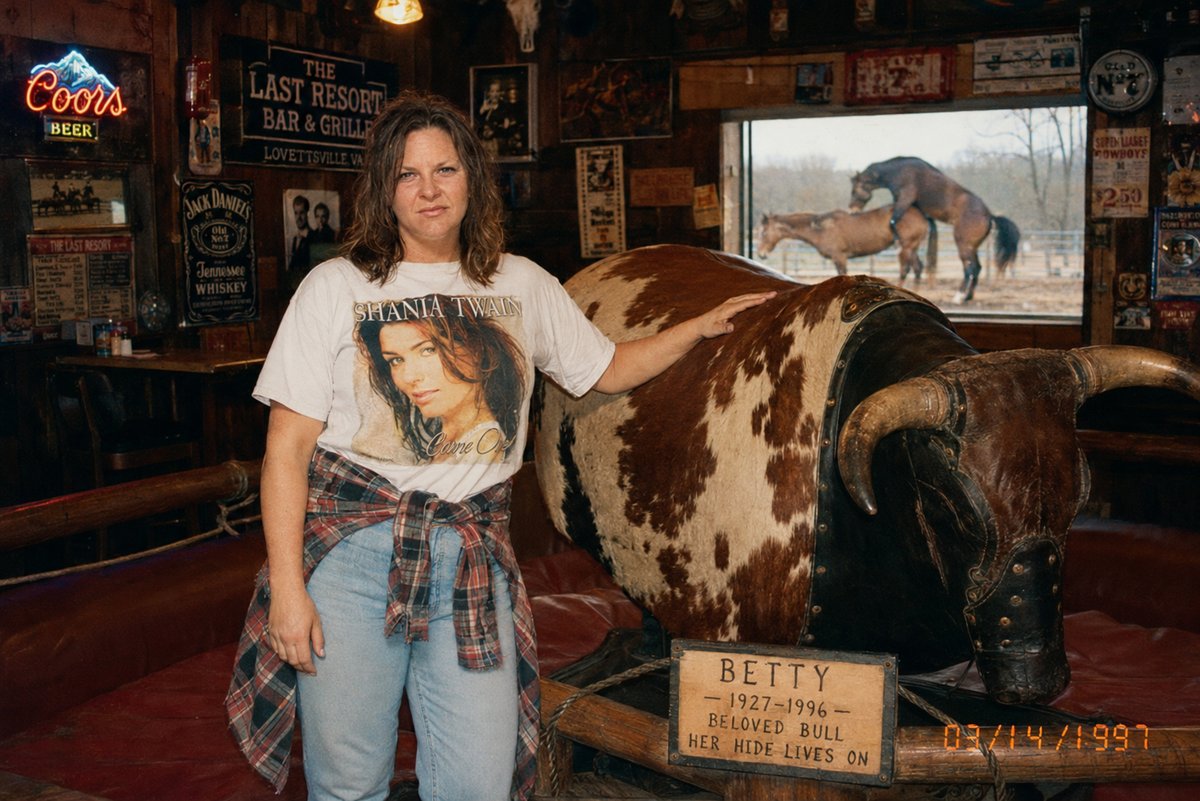
The Men's Room Soap Dispenser Has Dispensed Only Air Since February and We Have Decided That Is FineThe Mechanical Bull Has a Smell Now
Voted Least ADA Compliant Virginia Bar 2026We Fired Our Ugly Bartender, Rhonda
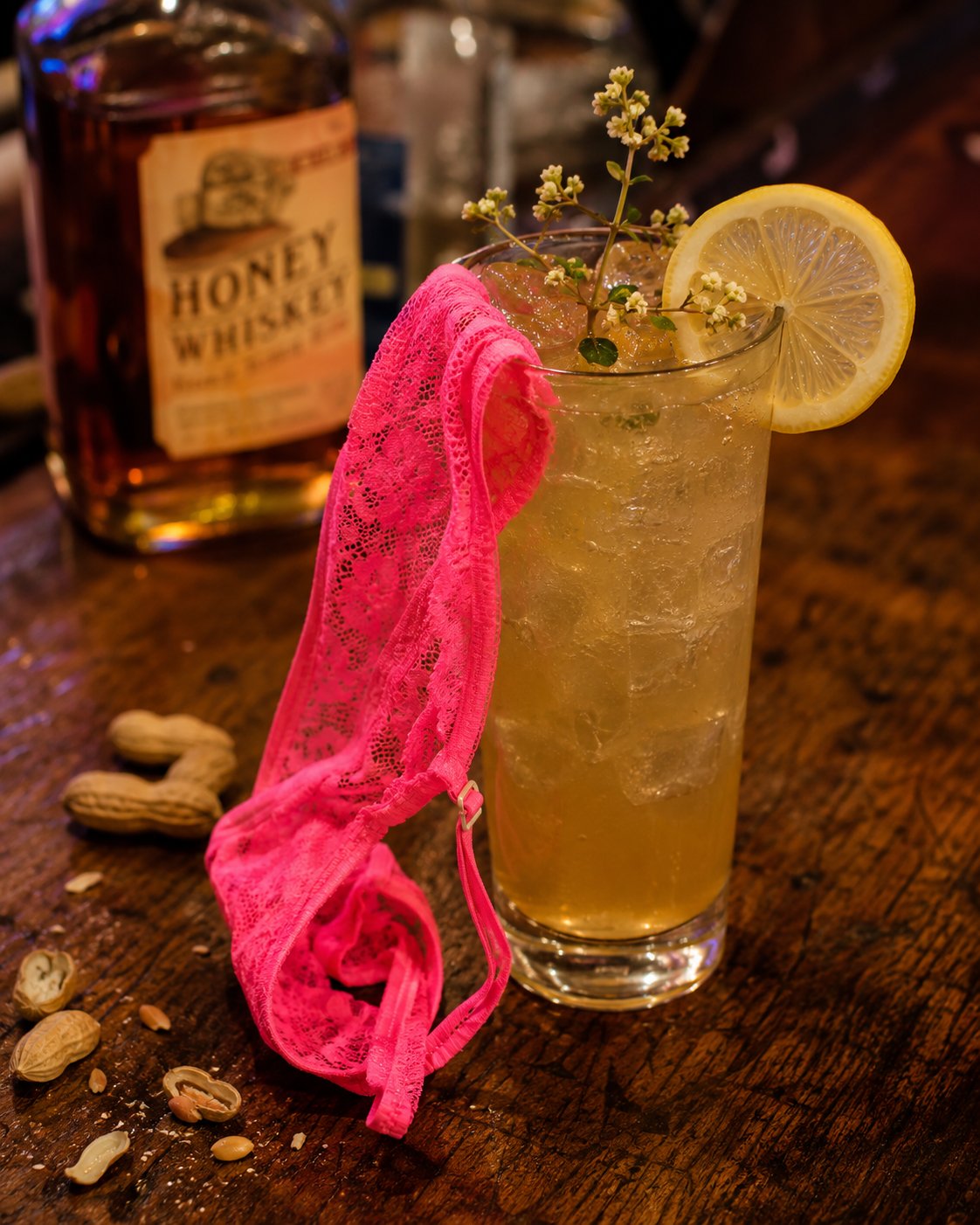
The Front Door Sticks When It Rains Because the Frame Swells and We Have Not Fixed ItWe Found a Thong in the Jukebox
The Pool Table Now Tilts Slightly Right Because One of the Horizontally Endowed Cast Members From My 600 Pound Life Leaned on It the Other DayWe Don't Accept EBT
We Do Accept Kohl's CashThe TV Remote Has Been Missing Since Sunday and the Channel Is Currently Stuck on a Spanish Soap Opera Nobody Has Bothered to Fix
Smoking Inside EncouragedOur Cook Has a Warrant in Two Counties
The Men's Room Soap Dispenser Has Dispensed Only Air Since February and We Have Decided That Is FineThe Mechanical Bull Has a Smell Now
Voted Least ADA Compliant Virginia Bar 2026We Fired Our Ugly Bartender, Rhonda
The Front Door Sticks When It Rains Because the Frame Swells and We Have Not Fixed ItWe Found a Thong in the Jukebox
Saturday Nights Hit Different
Cold-ish beer. Live music that sounds alright. Free peanuts.
Find Us
Follow The Chaos
In additions to bein on the interwebs we is also on the Instagrams now.
@lastresortbarngrille
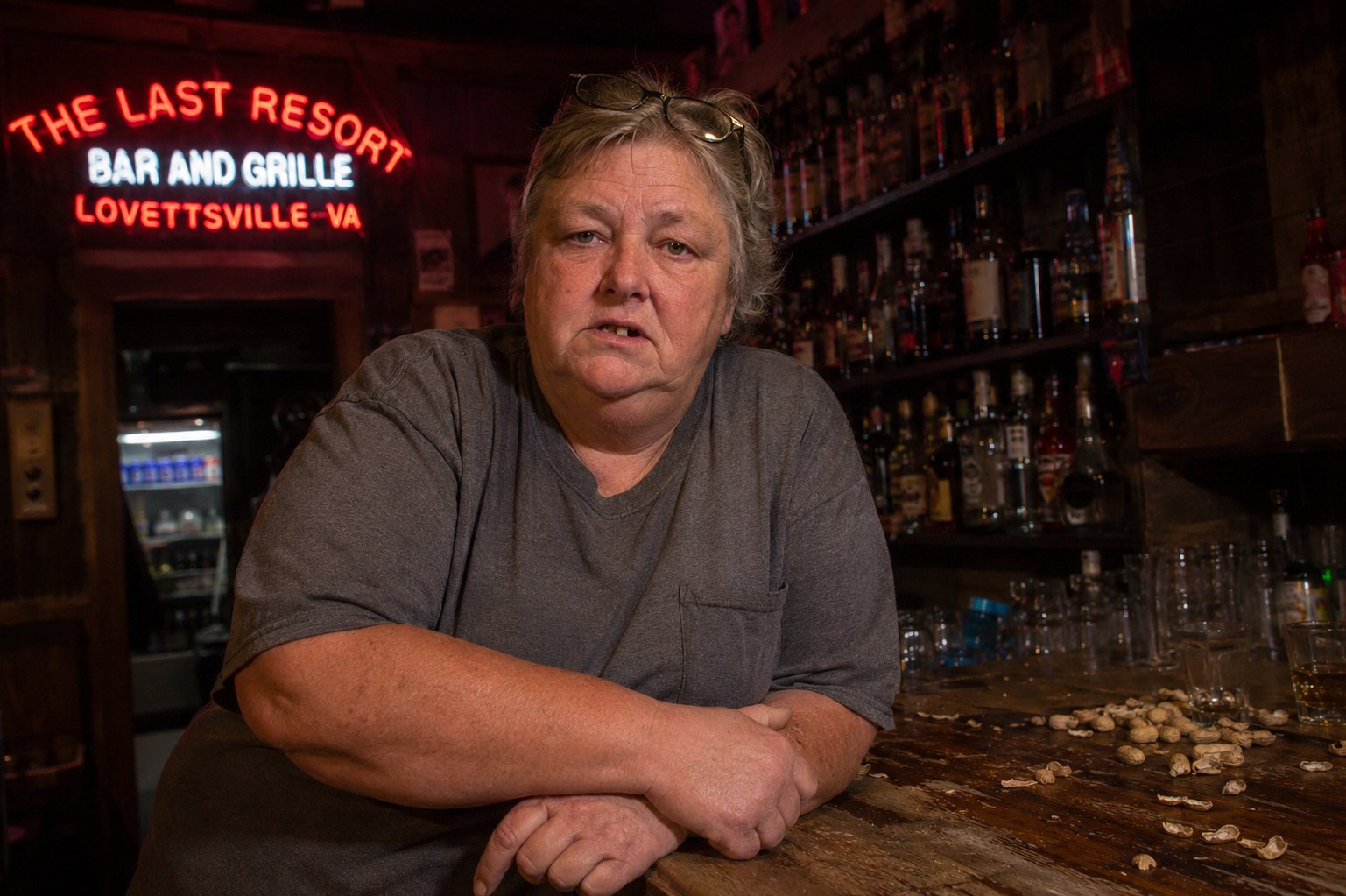
Darlene
Owner / General Manager
Darlene has owned The Last Resort since her second divorce finalized in 1991 and has not taken a day off since. She arrives every morning on a Harley-Davidson Tri Glide and parks it sideways across two spots because the lot is hers. She is a founding member of an all-female riding club called the Scissor Sisters MC, which meets every third Sunday at the bar and has a strict no men no exceptions policy that Dale Sr. has tested twice and lost twice. She manages her staff using Patrick Swayze quotes from the 1989 film Roadhouse. Her most frequently used is 'be nice until it's time to not be nice,' which she has applied to vendor disputes, a health inspection in 2021, and the ongoing situation with Reginald. She and Dale Sr. have been married since 2003 following a courthouse ceremony that lasted eleven minutes. Dale Sr. cried. Darlene did not. She has gout in her left foot and has been advised by Dr. Chang to reduce her red meat and alcohol consumption. Her response was to add a second barstool behind the register so she could keep the foot elevated while she works.
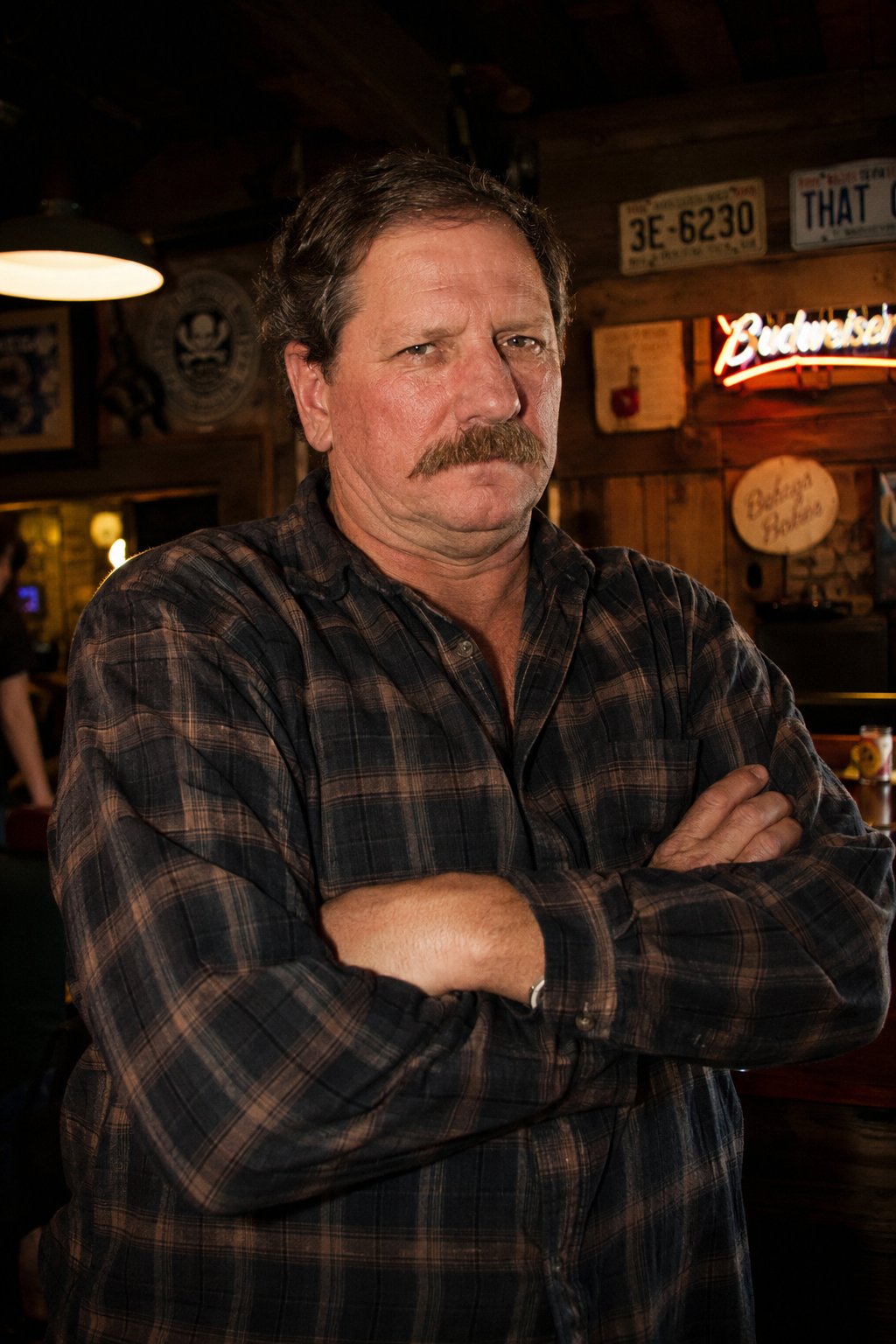
Dale Sr. "The Intimidator"
Backup Bartender / Co-Owner
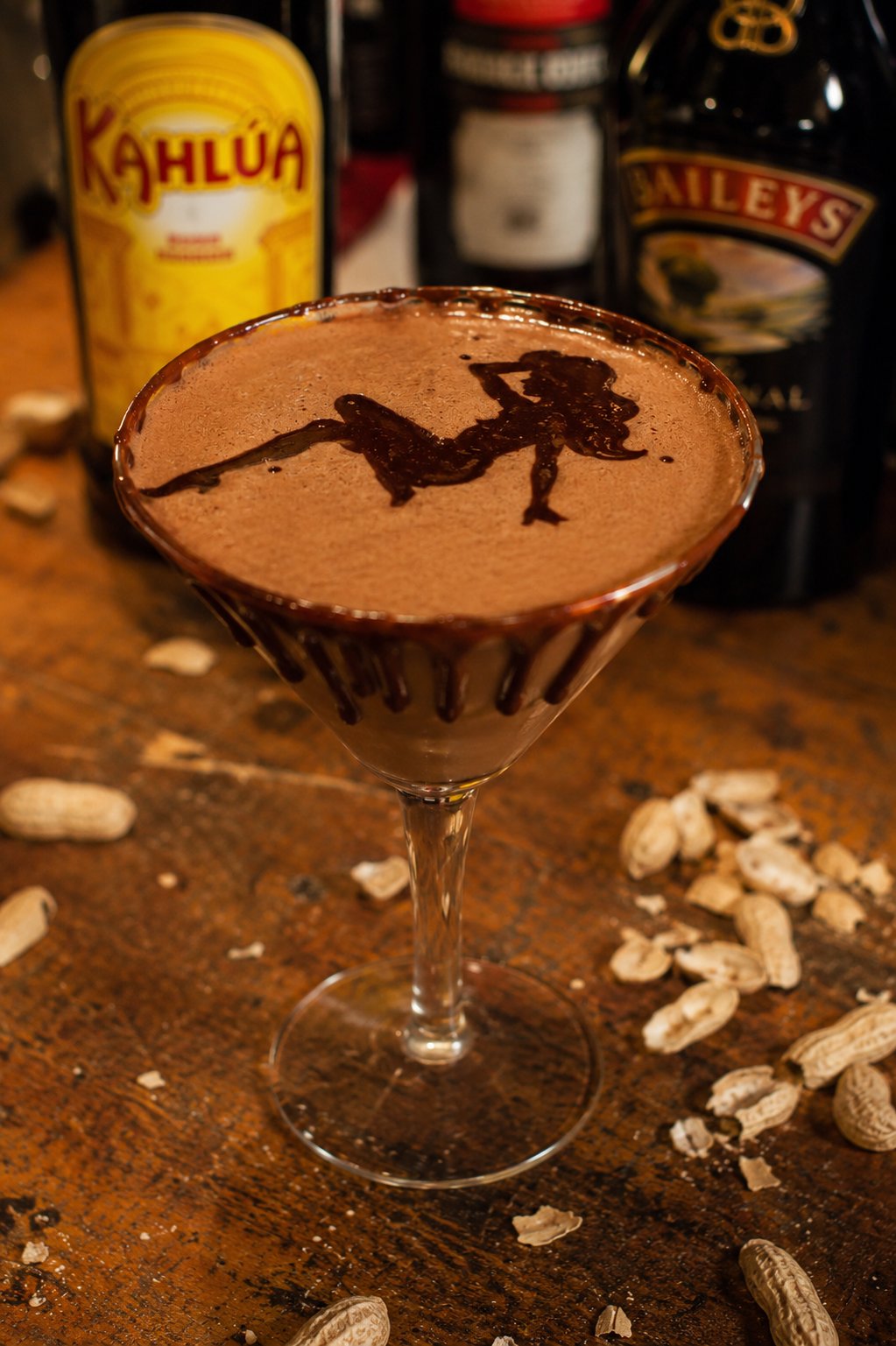
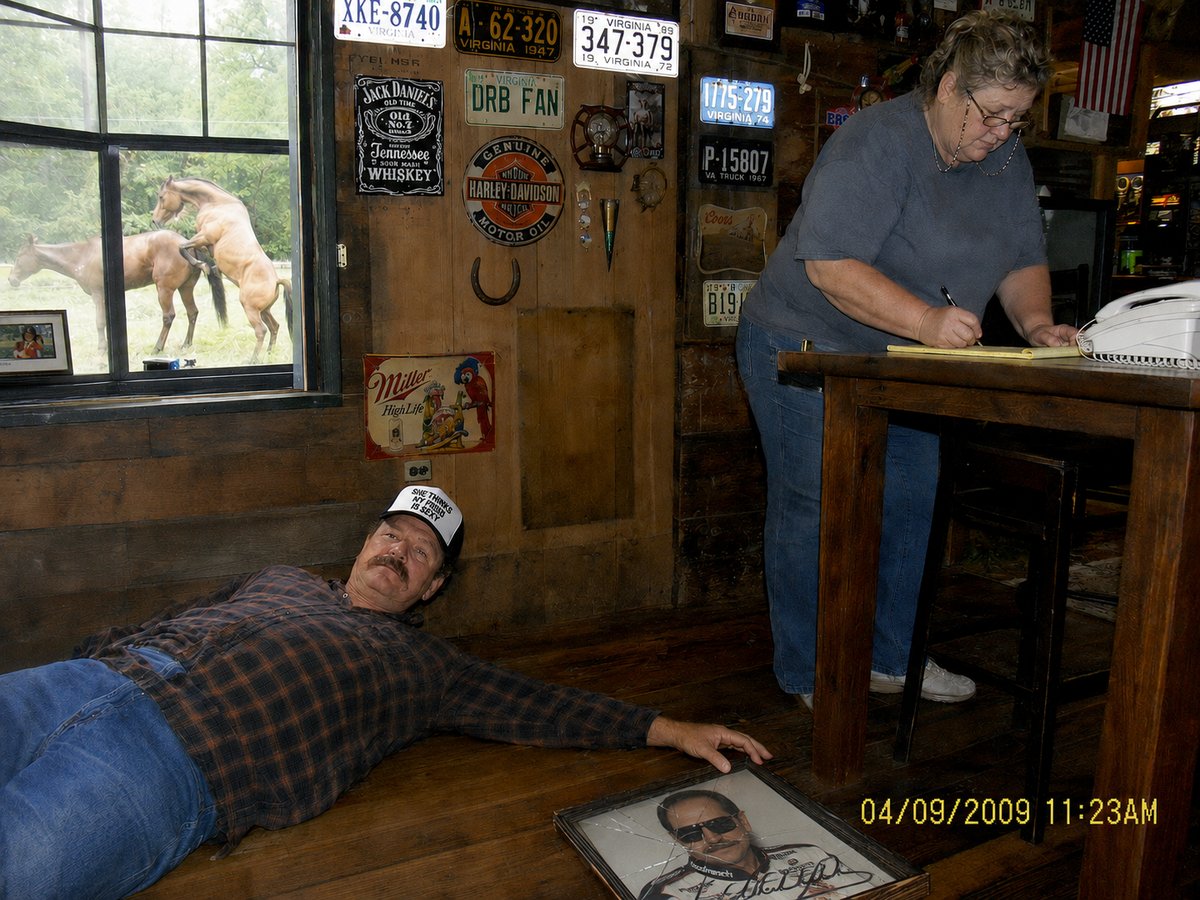
Dale Sr. has co-owned The Last Resort with his wife Darlene since their courthouse wedding in 2003, though his involvement with the bar dates back further than hers — he'd already been working the door for two years by the time Darlene took over in 1991, and simply never left. He bears a strong physical resemblance to Dale Earnhardt, a comparison that has been made to his face no fewer than 40 times and has caused him to tear up on 40 occasions. He keeps a framed photo of Earnhardt above the register and has requested that February 18th be observed as a moment of silence at the bar every year since 2002. He is responsible for all alcohol purchasing, vendor relations, and state ABC compliance. He has received four ABC compliance notices since 2019 and has responded to each one with a letter containing only the word 'ok' and his signature. He drives a 2019 Toyota Prius. He has strong opinions about the federal government, the deep state, the metric system, and the outcome of several reality television programs including Southern Charm and Jersey Shore, which he watches every week and discusses at length with anyone within earshot. He orders espresso martinis. He makes them himself because nobody else at the bar knows how.
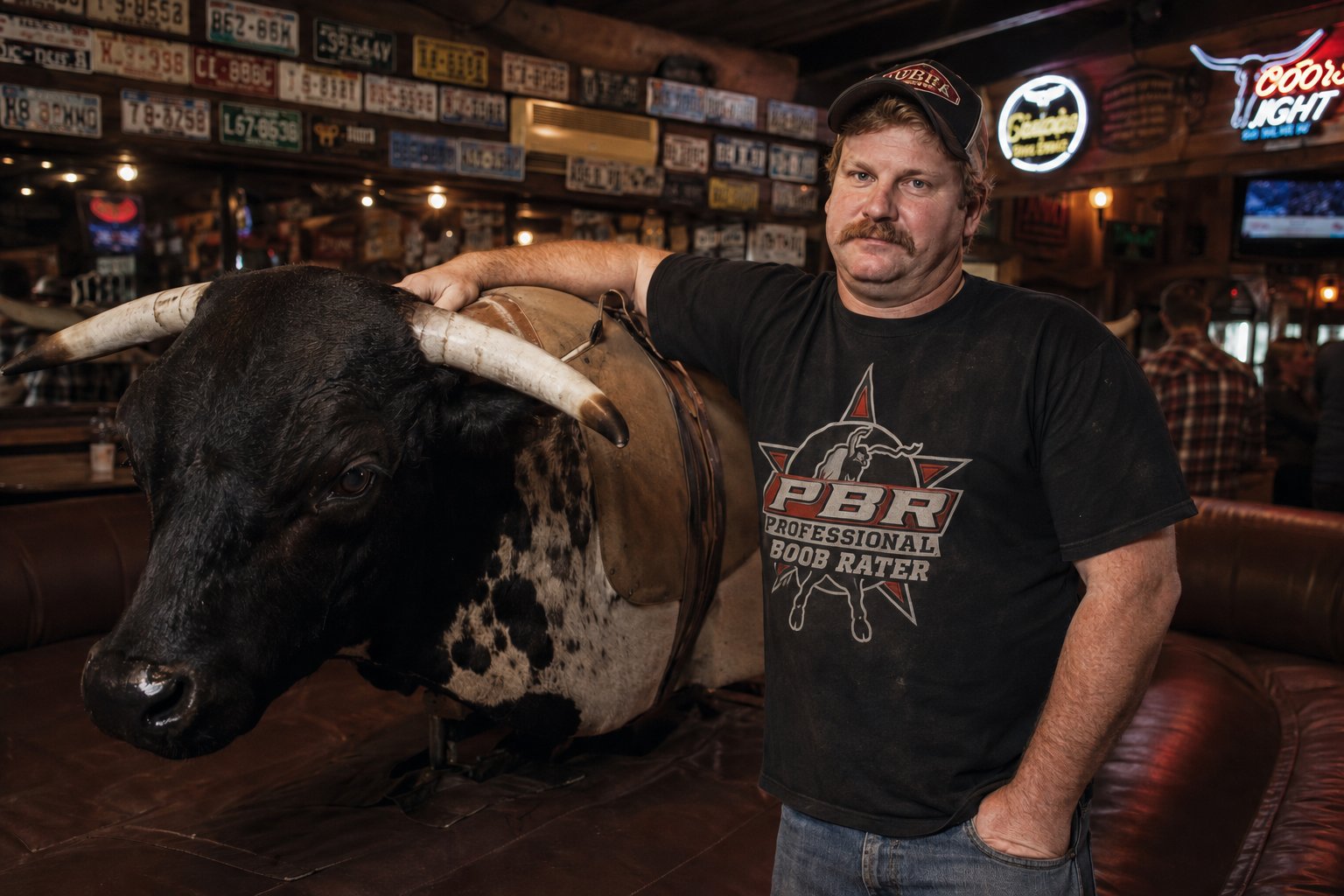
Dale Jr.
3rd Shift Mechanical Bull Operator
Dale Jr. is Dale Sr.'s illegitimate son and has worked at The Last Resort since Darlene agreed to put him on payroll in 2019 as a condition of keeping Dale Sr. off the register. He operates Betty the mechanical bull Thursday through Saturday nights and manages the bar's Instagram account, a position he was given in 2026 and treats as his primary career. He has strong opinions about content strategy, posting times, and hashtag selection that he shares in a group text that only he responds to. Dale Jr. claims to be a former PBR bull rider who was better than JB Mauney and maintains that the nickname the Million Dollar Cowboy rightfully belongs to him and was taken under circumstances he is still pursuing legally. His current record on Betty is 2.4 seconds, which he attributes to a recurring hip flexor issue. He runs the bull operation with a clipboard, a stopwatch, and a laminated rulebook printed at Office Depot that covers seventeen operational scenarios including a full page dedicated to the proper procedure for informing a mobility-impaired patron that Betty is temporarily out of service specifically right now and only right now and will definitely be back up later. He actively discourages male ridership through a combination of extended wait times, vague mechanical concerns, and a sign he made himself that says LADIES RIDE FREE that is only displayed on nights he is working.
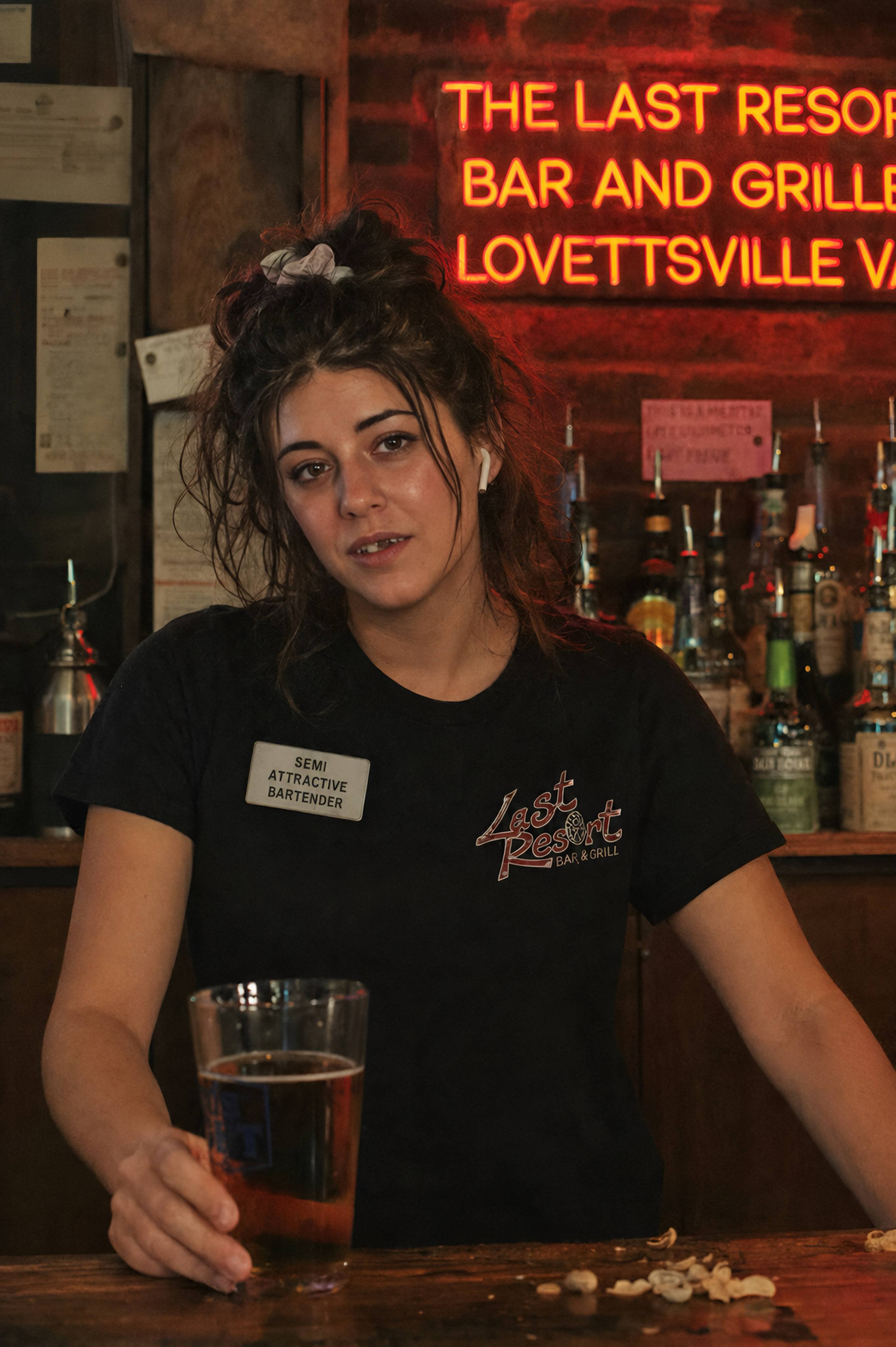
Semi Attractive Bartender
Bartender
She is the bar's primary bartender and has been for longer than anyone can verify. Nobody knows her actual name. This is not because she is secretive — her name tag has simply always said Semi Attractive Bartender and at some point it became the only name anyone had for her. She is semi attractive in the specific way that becomes considerably more attractive as the night progresses. This is good for business. She pours heavy, remembers every regular's order, and has single-handedly retained more male clientele than any Happy Hour special this bar has ever run.
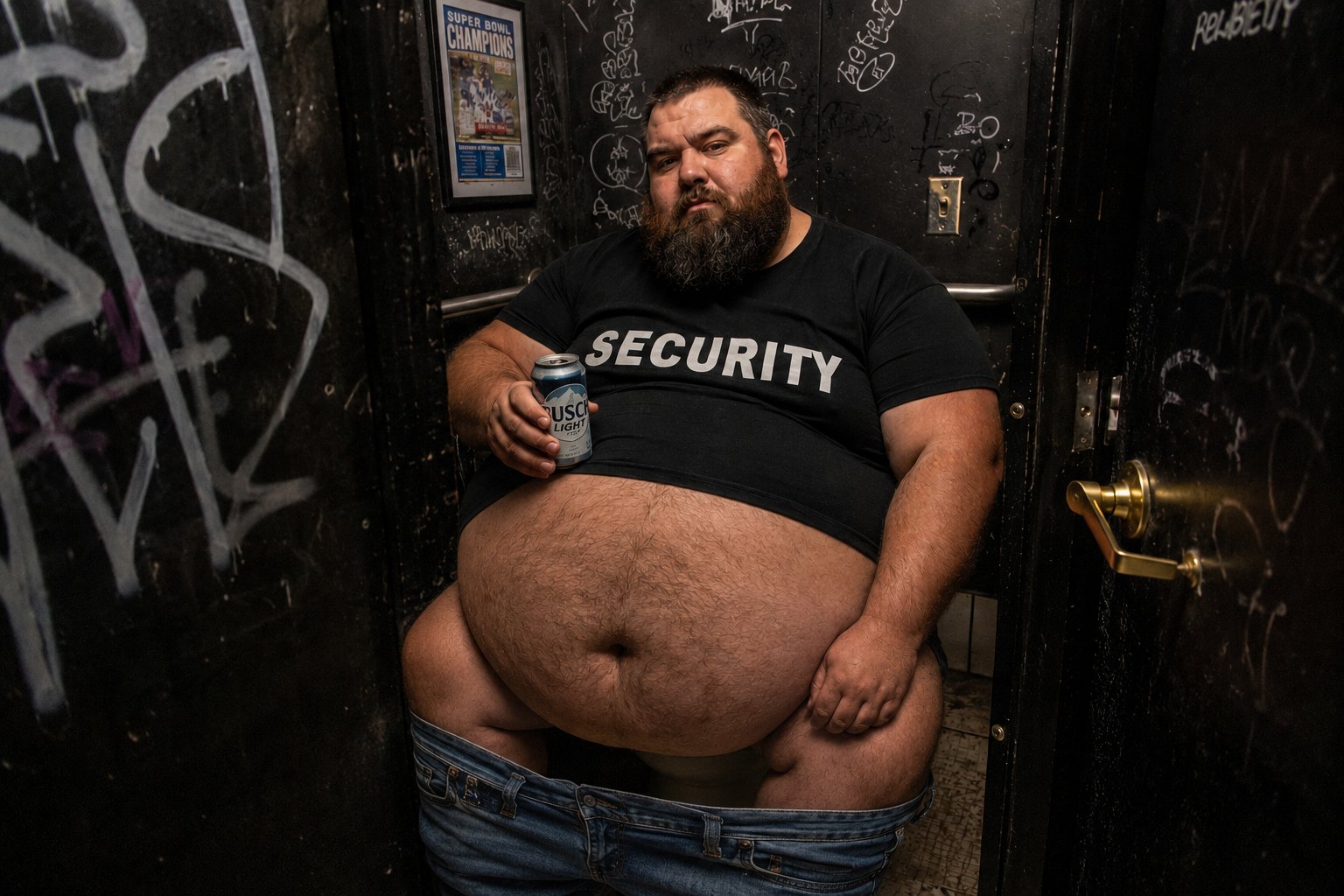
Buffalo Bill
Head of Security
BuffaloWildWings Billiam has been the head of security at The Last Resort since 2018. He is approximately 400 pounds and has broken up 34 bar fights since his hiring, 31 of which he resolved by sitting on the offending party until the situation de-escalated. He runs a fitness Instagram account called BillsGainsVA with 12,400 followers where he posts shirtless transformation photos, supplement reviews, and motivational quotes he writes himself. He also operates a subscription content page where he posts similar content for a monthly fee. The content is the same as the Instagram. People pay for it anyway. His monitoring station is the handicap stall in the men's bathroom, where he keeps a folding chair, a portable fan, a 12-pack of Busch Light, and a wireless doorbell receiver connected to a button mounted next to the entrance. When the button is pressed he is at the door in under 90 seconds. Management considers this acceptable response time.
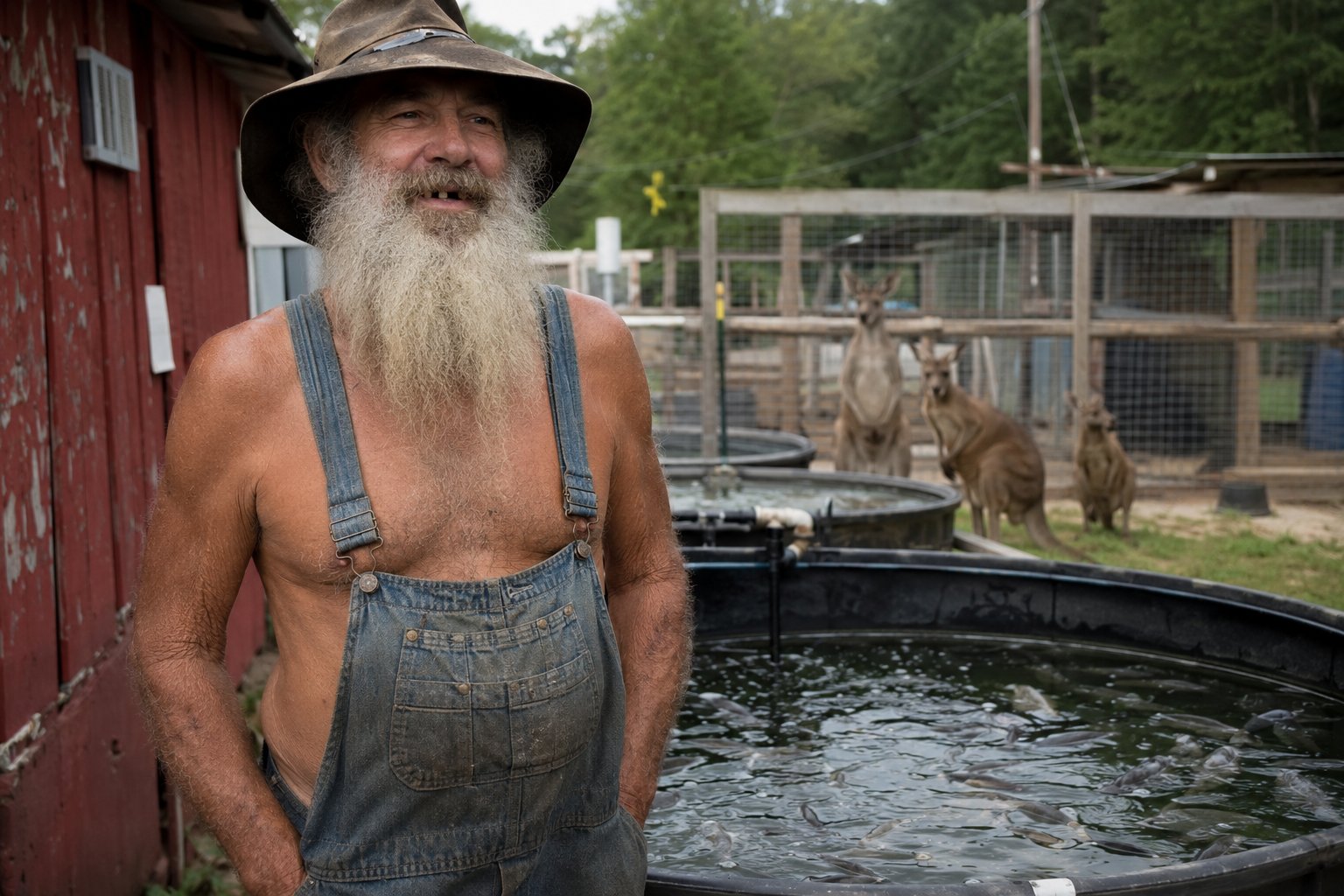
Trapper
Animal Trapper / Food Supplier / Tilapia & Kangaroo Farmer
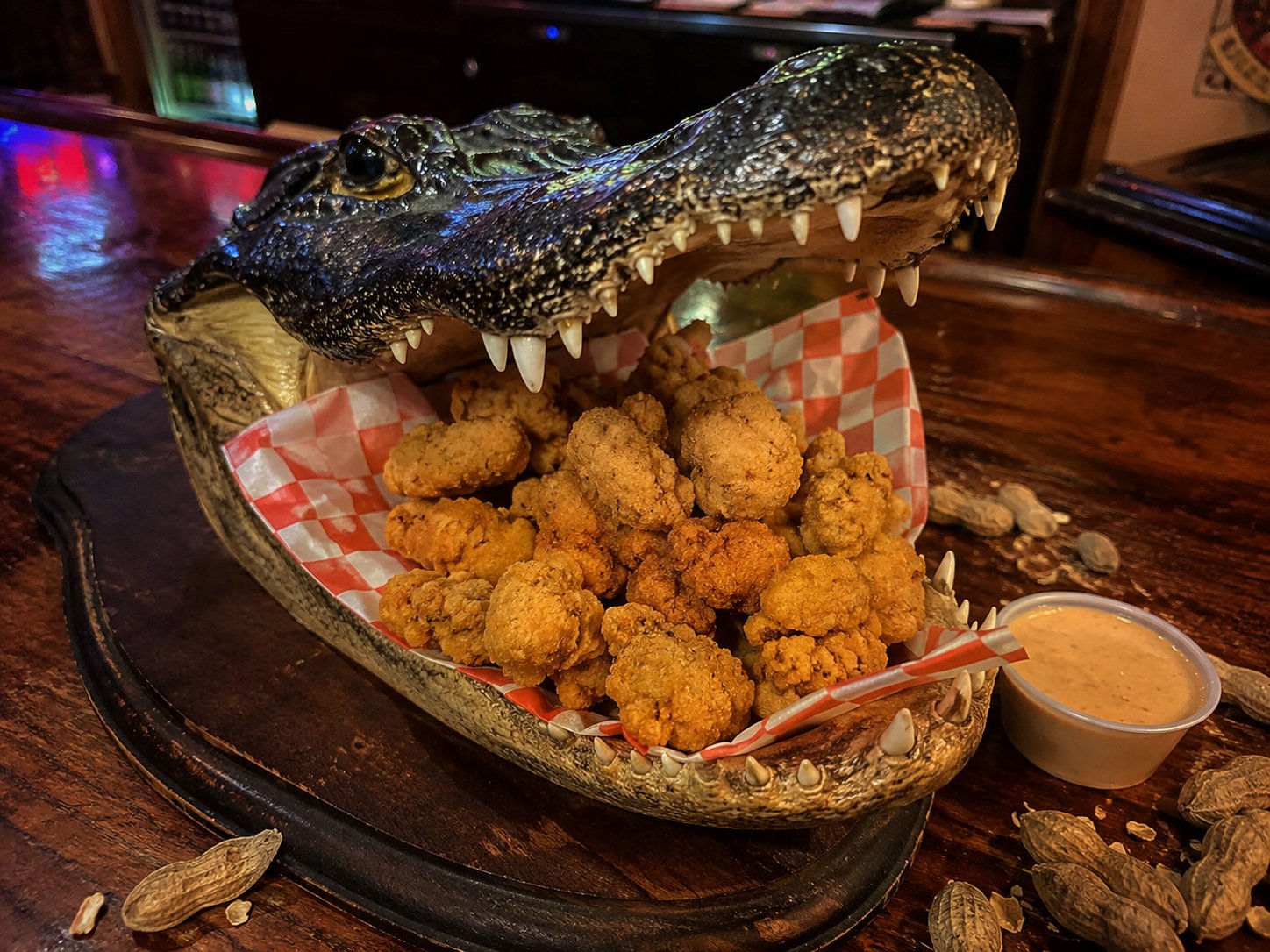
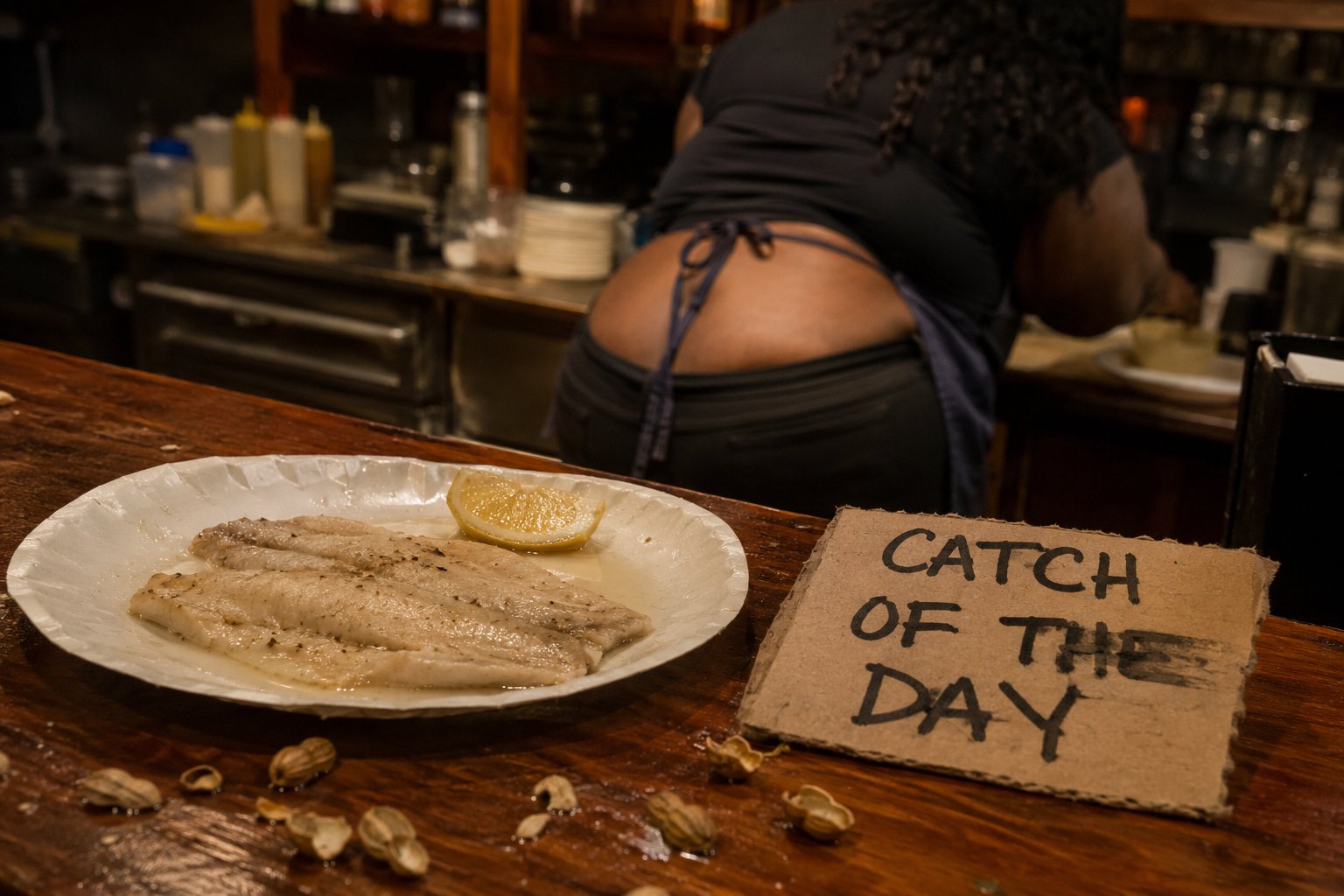
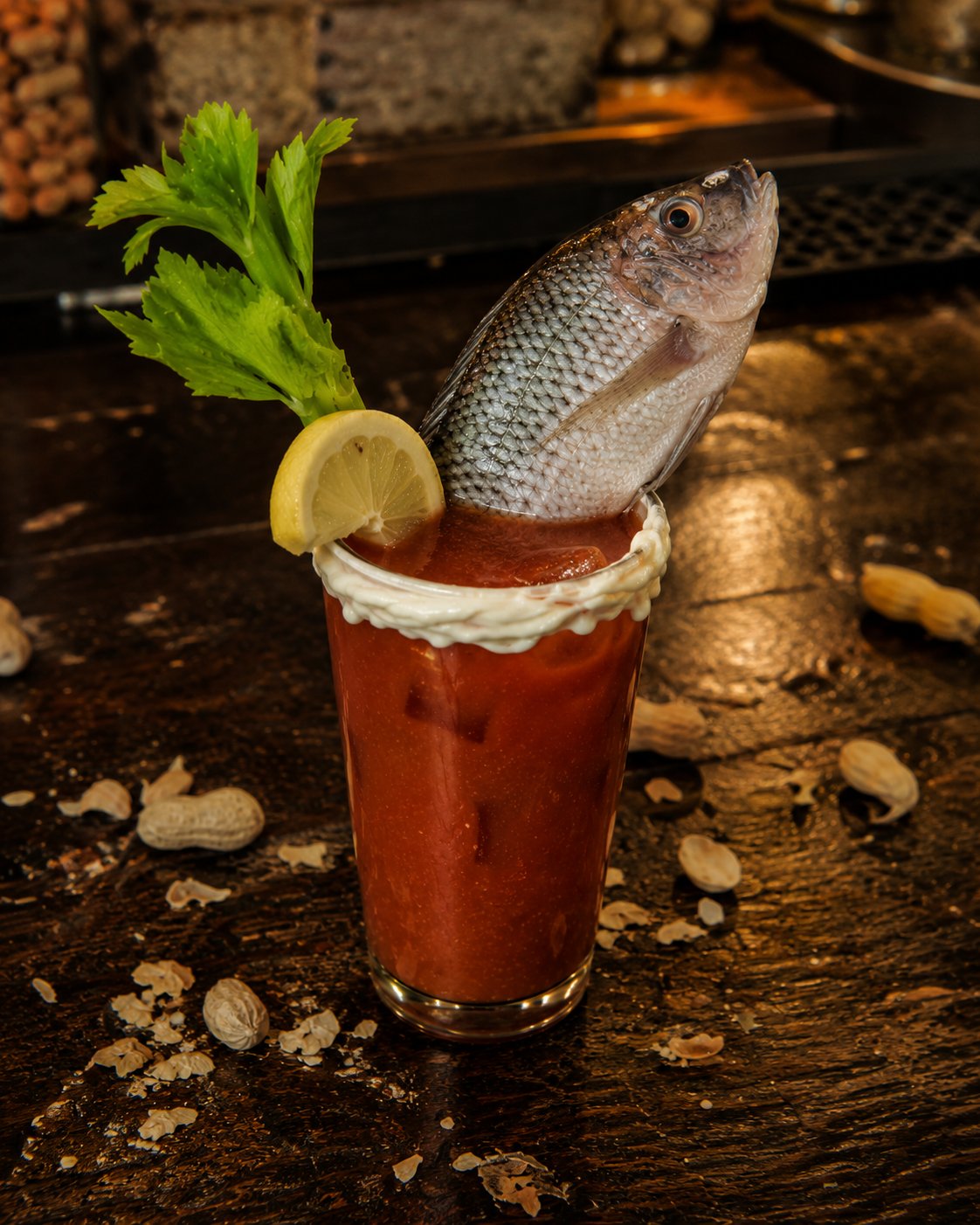
Trapper has supplied The Last Resort kitchen with fresh protein for nine consecutive years. He runs a shared enclosure behind the bar that currently houses tilapia, eight kangaroos, and a gator population he describes as self-sustaining and largely under control. The tilapia and gators are both on the menu in various forms. The kangaroos are not on the menu. Trapper purchased them from a livestock auction in Harrisonburg in 2021 for $340 each and has housed them with the tilapia and gators ever since. All three species have coexisted without incident, for the most part. He also traps possum, squirrel, rabbit, and nutria as God provides, and collects roadkill along Route 287 on his way in every morning. The bar has never verified a home address for Trapper. Every morning he emerges from the tree line at 5:50am. Every evening he walks back into it. He has never once been seen wearing shoes in nine years.
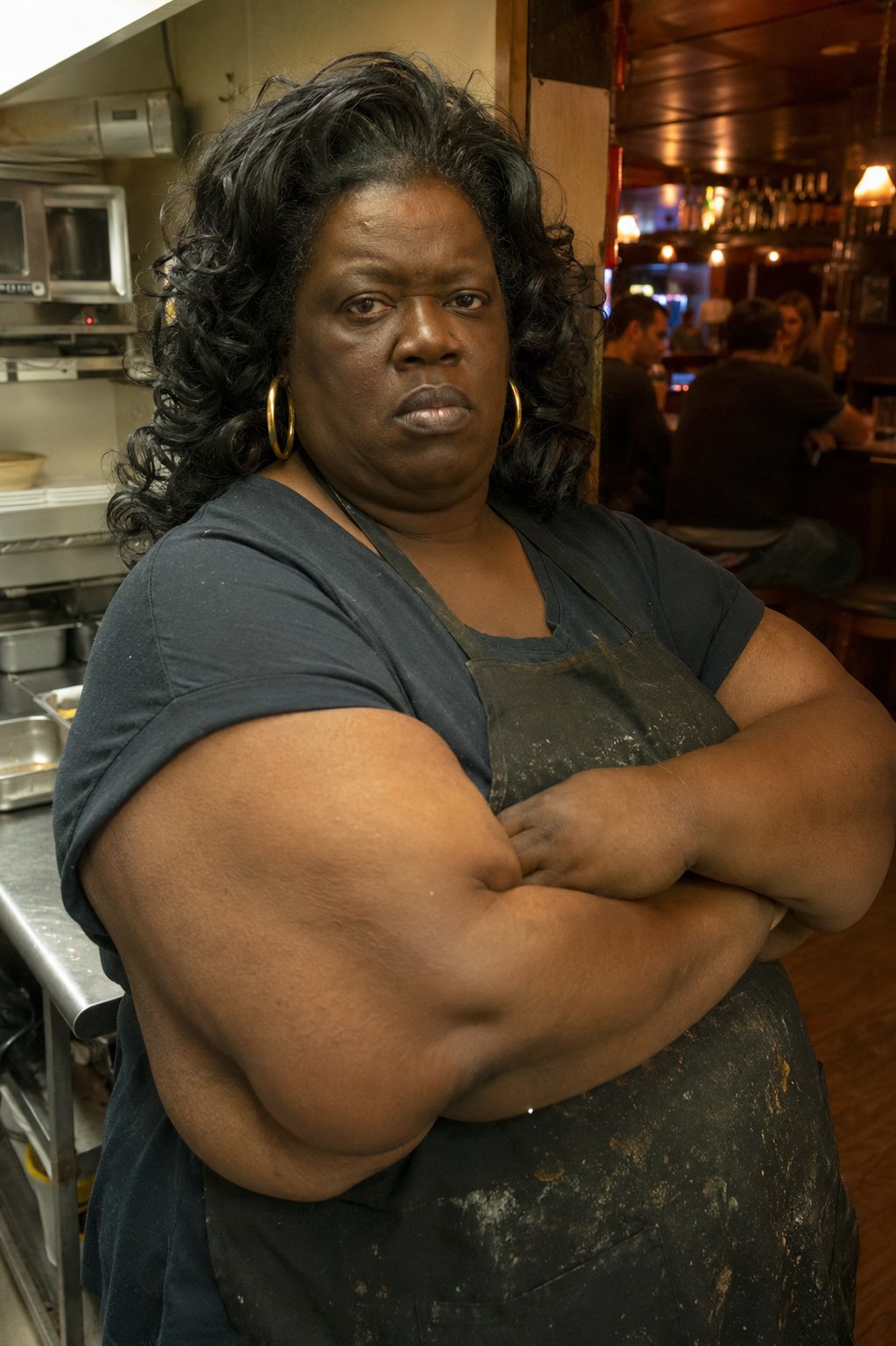
Bernie Mae
Kitchen Manager
Bernie Mae is Bernie Mac's sister and has run the kitchen at The Last Resort since the previous kitchen manager left without notice or forwarding address in 2019. Before coming to Lovettsville she was briefly married to Colonel Sanders, told the Burger King to his face to have it his way and walked out, outpizzaed the Hut in a 1994 blind taste test that Darlene has framed above the pass-through window, and is widely believed to be the woman who asked Wendy where the beef was. She also served in the Cajun Navy and retired at the rank of Rear Admiral, a command structure she brought with her to the Last Resort kitchen in full. She runs the line with complete authority and a wooden spoon she has carried since 1987 that has never once been used for stirring. The food at The Last Resort is genuinely excellent and regulars attribute a significant portion of this to Bernie Mae's bat wings, which get involved in every dish whether she intends them to or not.
Angus Armstrong
Line Cook
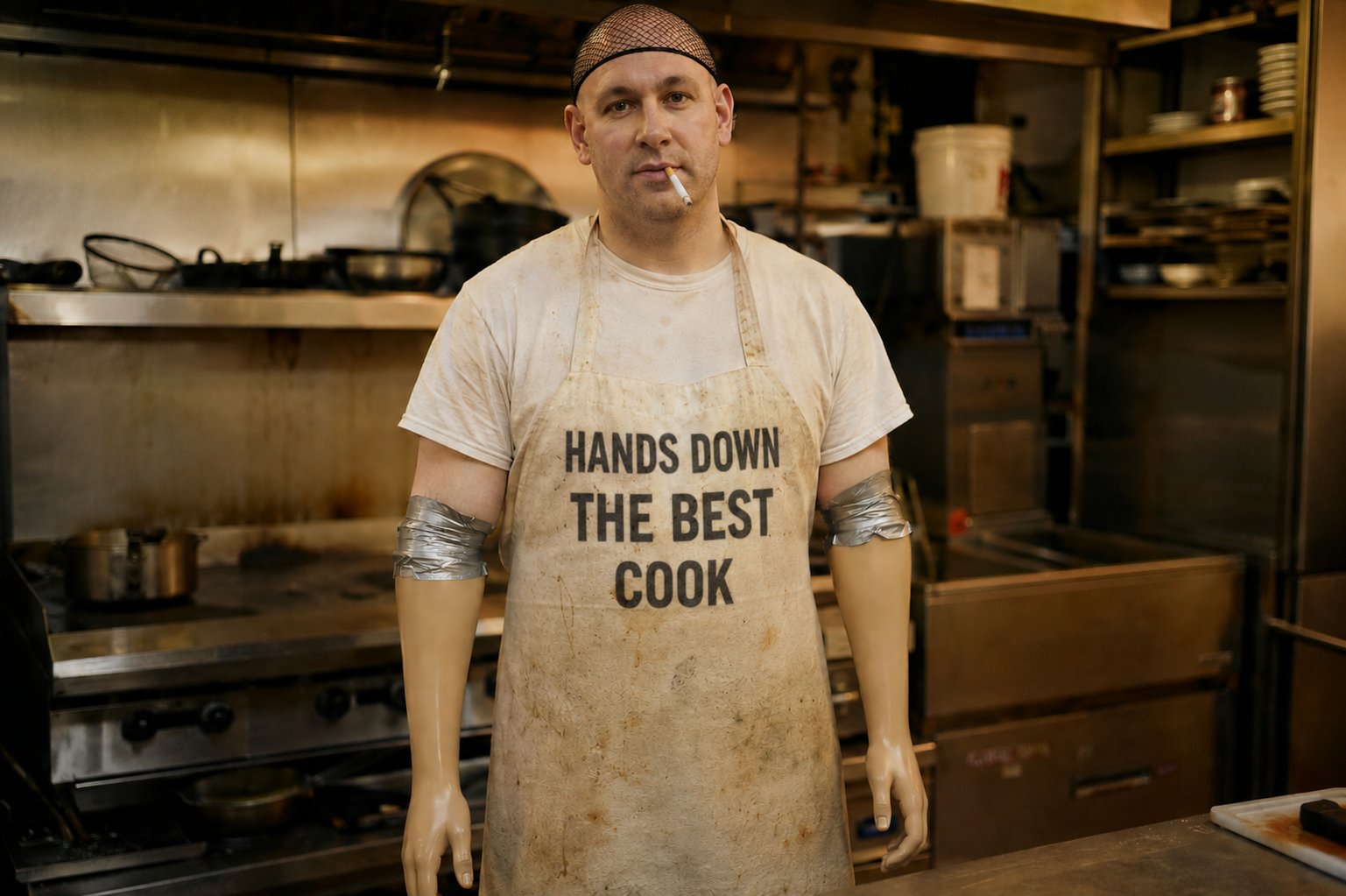
Angus Armstrong lost both lower arms in the Meth Wars of 2017. His replacement lower arms are duct-taped mannequin arms sourced from a Spirit Halloween that was going out of business. He manages the line cook station without difficulty. Do not ask him about the Meth Wars. He will tell you about the Meth Wars regardless. The telling takes approximately 45 minutes. Outside of work Angus enjoys arm wrestling and upper body day at the gym. He has never lost an arm wrestling match as his opponents don't want to seem ableist.
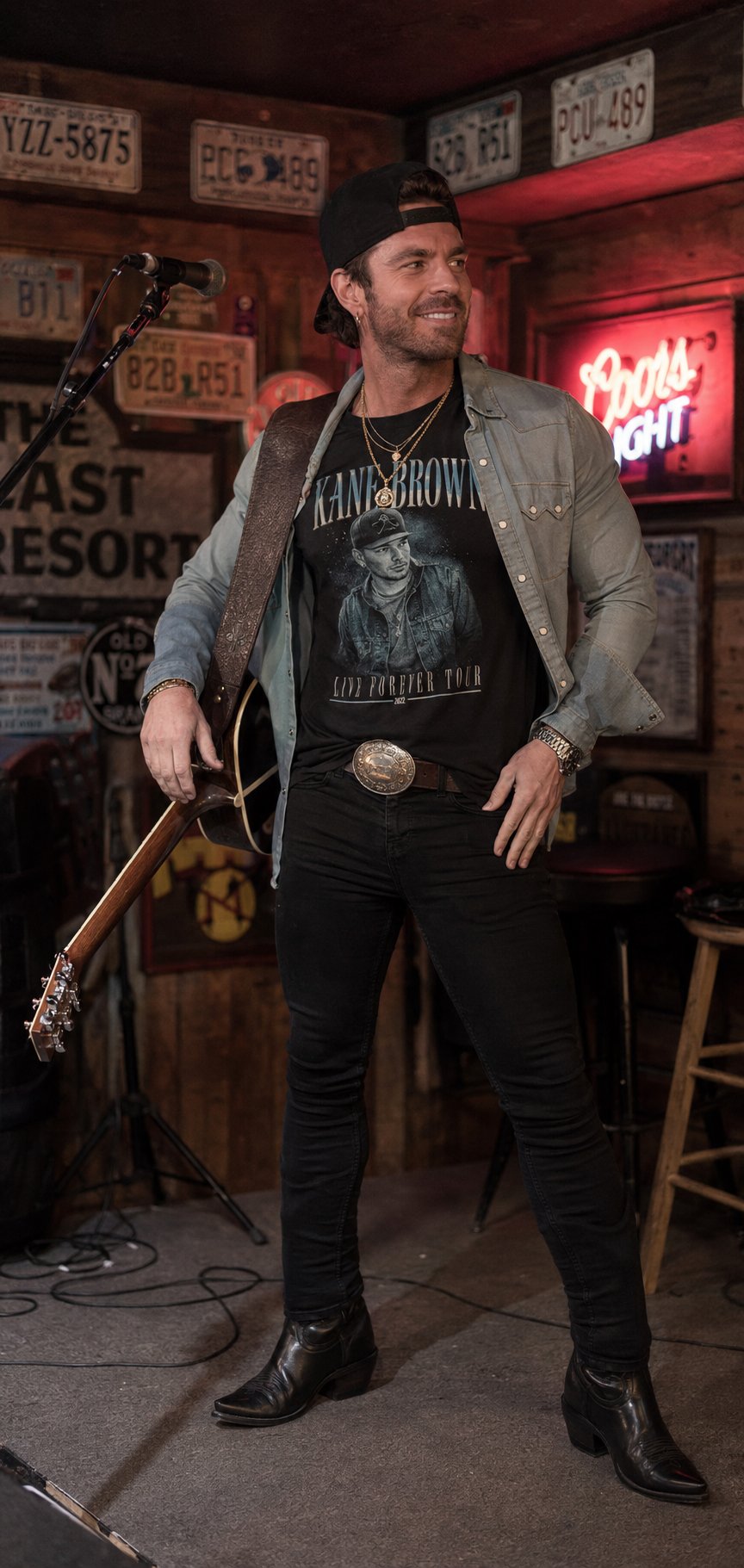
Byron Juul
House Musician
Byron Juul has been trying to make it to Nashville for eleven years. He performs a two hour set every weekend at The Last Resort. His band plays for the first 90 minutes while Byron warms up his vocals at the bar by drinking several White Claws and hitting on women significantly younger than him who want nothing to do with him. He then takes the stage for the final 30 minutes. The crowd at any given time is between three and five people including Gerald, who is asleep. His original songs are indistinguishable from every other song currently on country radio except slightly worse and with two more references to pickup trucks than is considered acceptable even by Nashville standards. He has handed his demo card to every person who has walked through the door since 2019, including the same seven staff members every single week, none of whom have listened to it. He believes he is one connection away from his big break. He has believed this for eleven years. The connection has not materialized.
Pajit
Customer Service Representative
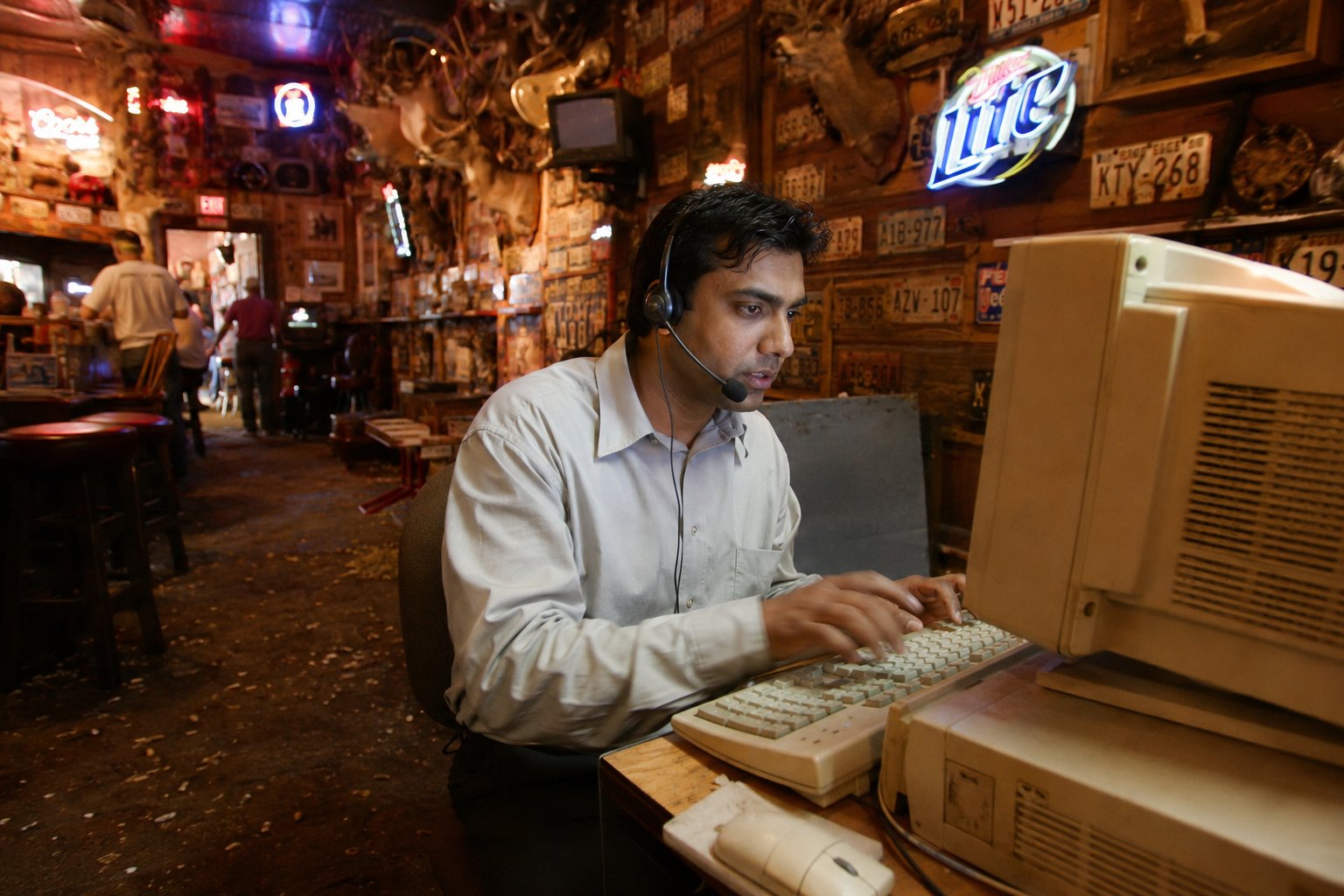
Pajit handles all customer service inquiries for The Last Resort including complaints, phone calls, and the occasional threatening letter. He operates from a 1993 desktop computer that is not connected to the internet and may not be turned on. He has a very thick accent and most customers cannot understand what he is saying. Pajit cannot understand most customers either. Complaints take approximately four to six weeks to resolve. Most people stop complaining before then. Pajit considers this a resolution.
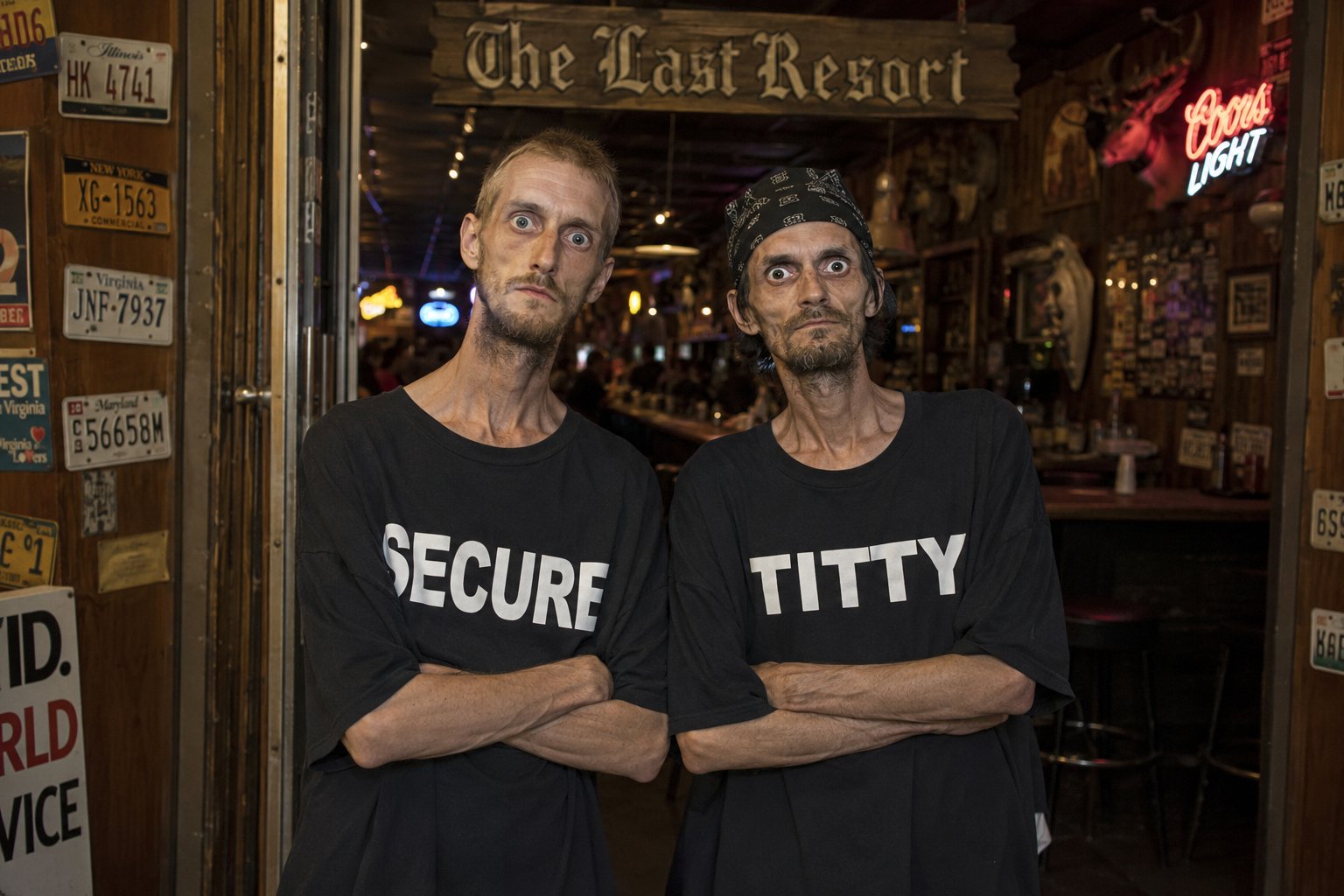
Daryl Meryl & Meryl Daryl
Reserve Security Officers / S.H.I.T. (Special Hazard Intervention Team)
Daryl Meryl and Meryl Daryl serve as Reserve Security Officers and comprise the entirety of The Last Resort's S.H.I.T. — Special Hazard Intervention Team — a unit Darlene established in 2022 after Buffalo Bill requested backup and these were the first two people who applied. Together they weigh approximately 220 pounds. They take their jobs extremely seriously and have never once blinked during a confrontation, a skill that has de-escalated four situations through sheer psychological discomfort alone. There is not a copper pipe, a catalytic converter, or an exposed wire within a ten mile radius of Lovettsville that is safe when they are off the clock. They are very fast. Nobody knows where they live. They are always here before open and always here after close and at no point has anyone seen them eat anything. They are paid in cash every Friday night. The cash is also gone by Friday night. Management has never asked what they spend it on because management already knows.
The Regulars
None of them are on the clock. All of them are on the premises.
Gerald
Regular / Salvation Army Veteran
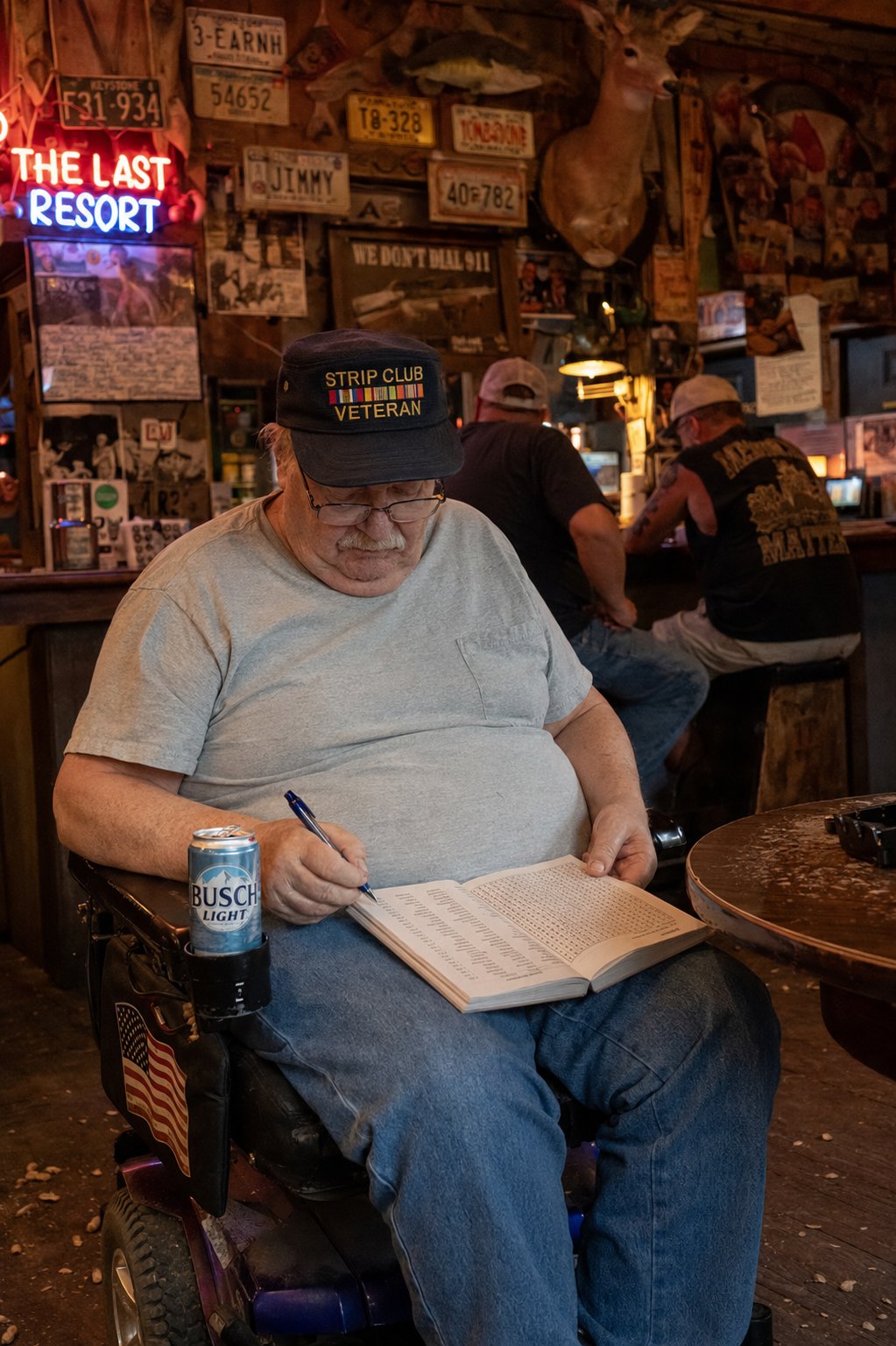
Gerald has been coming to The Last Resort every night since 2009 and has never once been asked to leave because nobody has figured out how to make him. He is a Salvation Army veteran and talks openly about the horrors of 'Nam, referring to a 2012 Korean Air vacation package to Vietnam during which the airline lost his luggage for eleven days. He is perfectly capable of walking and has demonstrated this on several documented occasions, but operates exclusively via a motorized wheelchair fitted with an American flag sticker and a Busch Light cupholder because it is more convenient and because he has bone spurs. The bone spurs have never been verified by Dr. Chang, who has offered to look at them every Sunday since 2019. Gerald has declined every time. He does the same crossword puzzle every night. It is the same crossword puzzle he has been doing since 2009. He has never finished it.
Burt
Regular / Karaoke Enthusiast
Burt works in HVAC and has for twenty two years. He is very good at it. His customers love him. He has a 4.9 star rating on Google with 340 reviews, several of which mention that he is a genuinely nice person. None of his customers have ever seen him on a Thursday night. Burt is a different person on Thursday nights. He arrives at 7pm, orders four Tito's straight chased with a Tito's soda, and has not worn a shirt inside The Last Resort since his first visit in 2019 when he took it off during karaoke and handed it to Reginald, who has had it ever since. He is on a first name basis with every staff member, every regular, and the health inspector who has cited the bar three times and refers to Burt specifically in two of the three reports. He considers The Last Resort his third place. His first place is his double wide. His second place is his 2007 Honda Odyssey, where he sleeps four nights a week by choice because he finds it more comfortable than his bed and has a pillow and a blanket back there specifically for this purpose.

Reginald
Corner Table. Every Night.
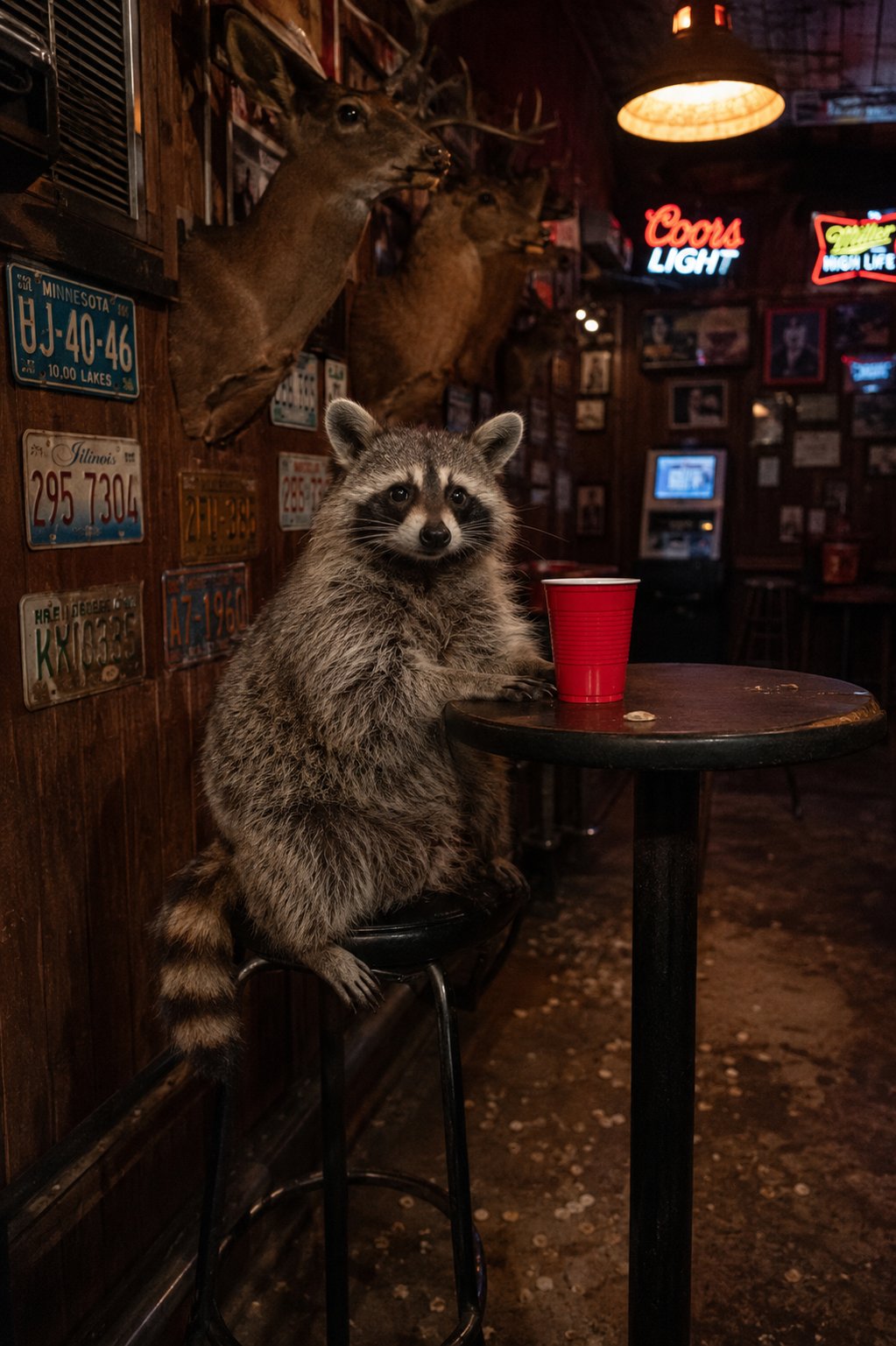
Age 47 (in raccoon years). Alcoholic. Recently divorced. Fluent in Mandarin.
Dr. Ronnie Chang
Barstool Dentist — Sundays 2:30–3:30
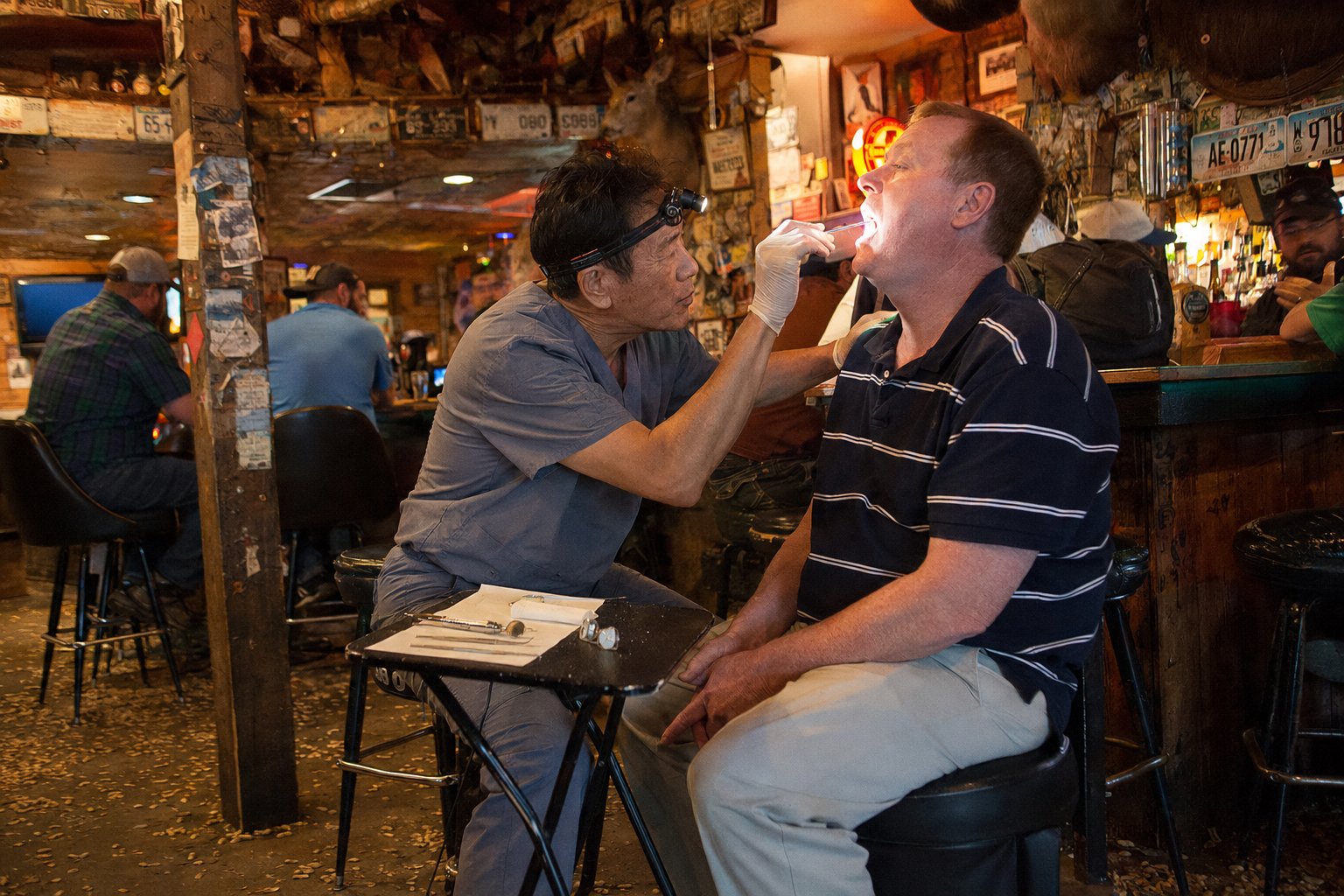
Dr. Lonnie Chang, or Ronnie as he calls himself, provides walk-in barstool dental services every Sunday from 2:30 to 3:30pm. He received his dental degree from the American University of Online Dentistry, a fully accredited institution he found through a banner ad in 2014 and completed in eleven weeks. His services at The Last Resort require no appointment and accept no insurance. He asks that patients brush their teeth beforehand. Most do not. Dr. Chang has formally requested on three separate occasions that the bar stop administering beer bongs to patients who are actively in the chair. The bar has declined this request on the grounds that cutting off a paying customer mid-procedure would constitute poor service.
Linda Lovelace
Regular / Lot Lizard
Linda Lovelace has been outside The Last Resort every night for as long as anyone can remember. She smokes Marlboro Reds and is a certified MILF working her way toward GILF status, which in Lovettsville is considered an achievement worth acknowledging. She knows your name, your order, and your mother's name, and there is a decent chance you spent a Friday night in ninth grade drinking your first beer in her basement, which had green shag carpet, wood paneled walls, and a smell that has not changed since 1972. If you are lucky enough she will invite you back in, where she will show you the photographs from when she toured with Mötley Crüe as a groupie during the Girls Girls Girls World Tour in 1987 and 1988.
Tattoo Terry
Regular / Biker (Technically)
Tattoo Terry is a full patch member of the Back Door Boyz MC, a club he co-founded in 2009 with his brother and another guy. His brother and the other guy now live together in San Francisco and do not return his texts. Terry continues to represent the club alone and considers himself its president, secretary, and treasurer. He cranks his hog every morning at 5:45am before work, every evening when he gets home, and on his lunch break if the spirit moves him. He hates grass clippings on his driveway, being tailgated, and civilians who walk around wearing Sons of Anarchy cuts like they've earned it, which Terry has confronted people about on four documented occasions including once at a Spirit Halloween. He has a tribal tattoo sleeve, an eagle on his chest, and the word HONER tattooed across his back in Old English font. He rides a baby blue 2004 Honda Metropolitan scooter he calls The Panty Dropper. He parks it next to the motorcycles out front every week.

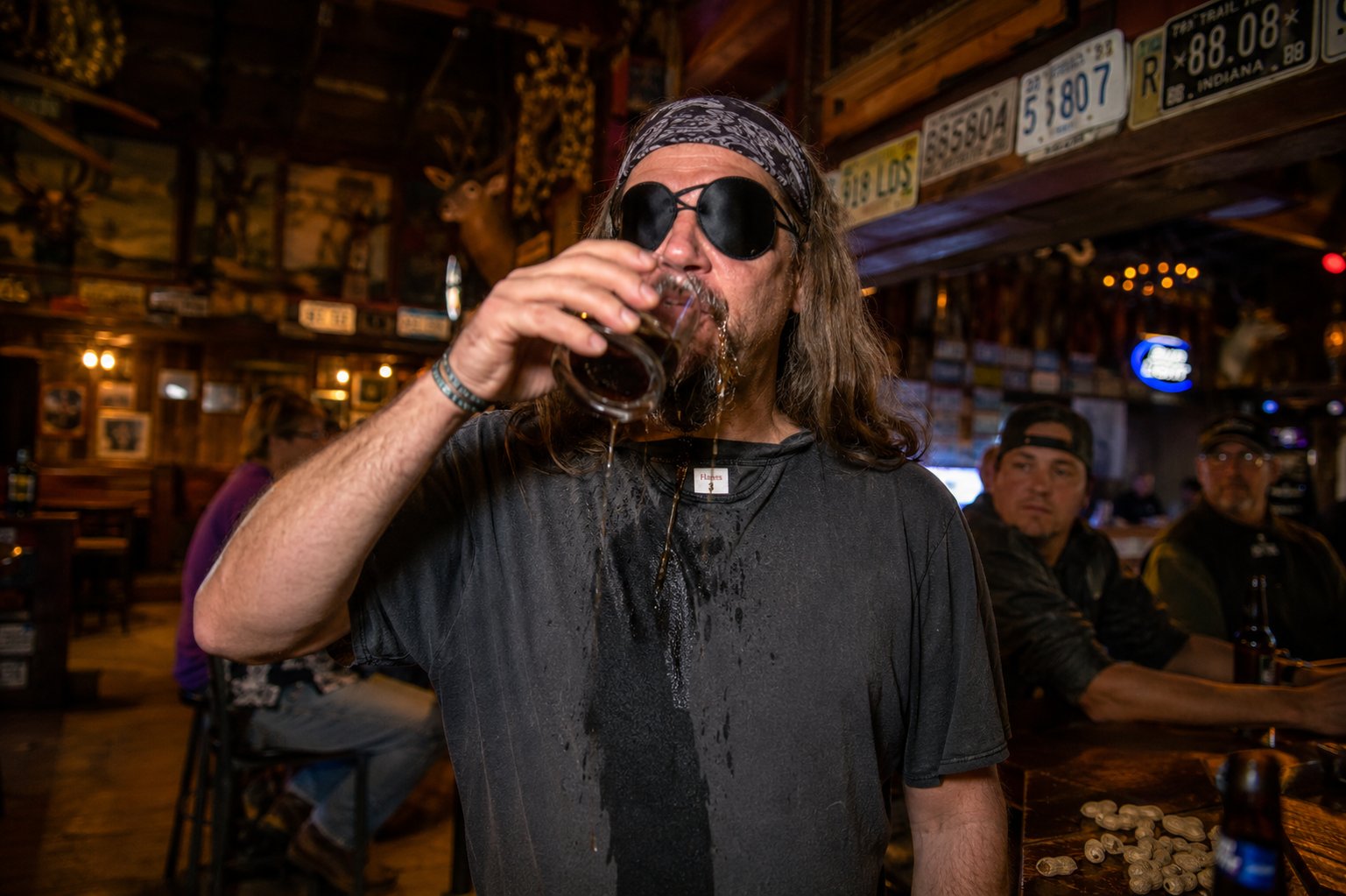
Seymour
Regular / Shuttle Driver
Seymour was a Vogue eye model from 1994 to 2003 and has the tearsheets to prove it. His eyes appeared in campaigns for Clinique, Maybelline, and a Sears optical insert that ran in seventeen regional markets. He lost both eyes in 2017 after staring directly at the solar eclipse for the full two minutes and fourteen seconds of totality without protective eyewear because he wanted to see it properly. He now wears two eyepatches and drives the Last Resort's complimentary shuttle service Thursday through Saturday nights. He has not had an accident since October 2023, when he sideswiped the Lovettsville Dollar General, got rerouted back toward the bar, drove through the fence of the kangaroo-tilapia-gator enclosure, and deposited the shuttle and its four passengers into the gator pond. Seymour walked away. The passengers did not. The Last Resort attributed the incident to road conditions and Seymour remains on the schedule. He holds a four point nine star rating on Google across twelve reviews. His only negative review was a two star complaint about his Kenny G playlist, which he has not changed.
The Feral People of Appalachia
Regulars (Sort Of)
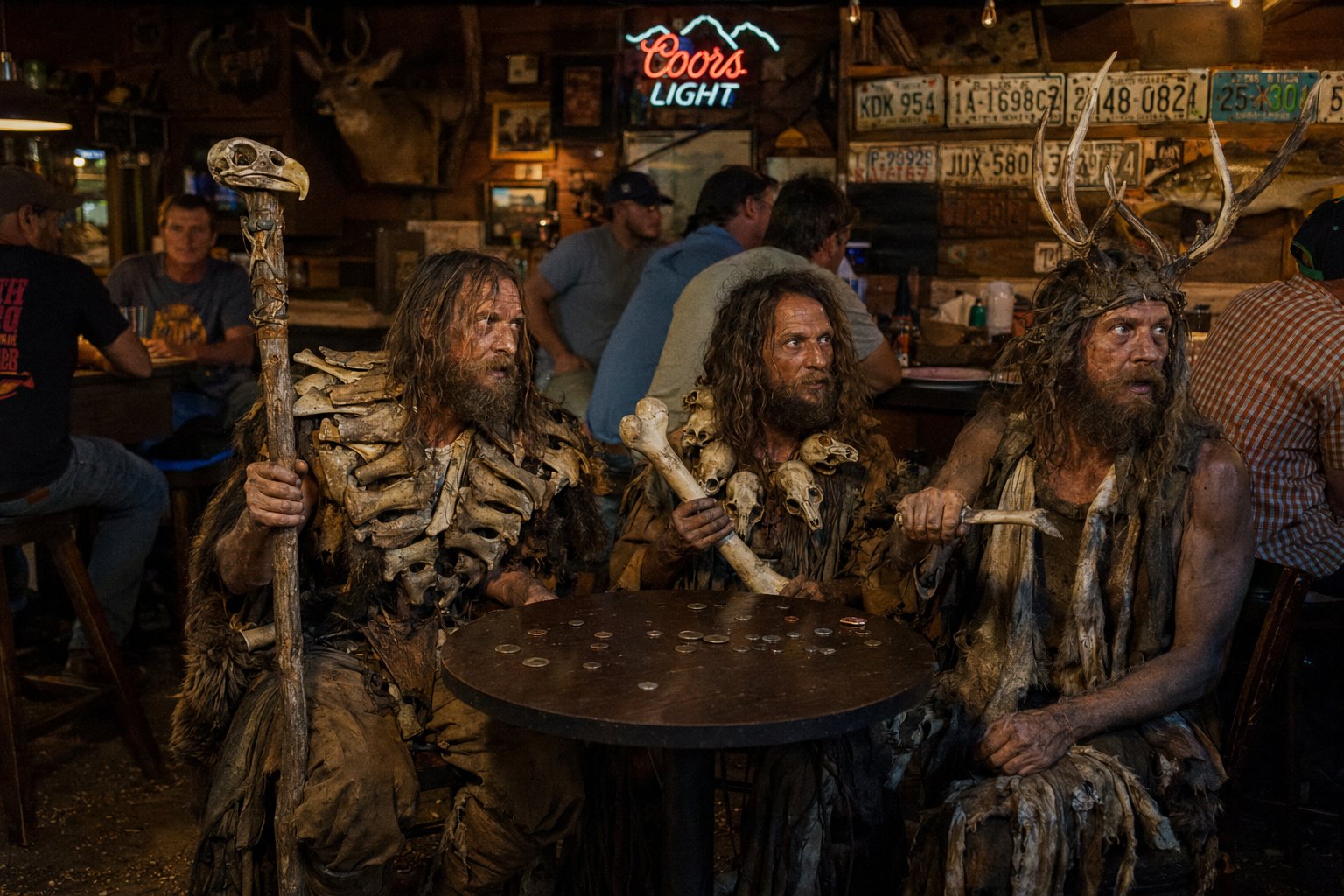
Between two and seven show up on any given night, always after 10pm, always through the back door, which is kept locked. They are descended from a moonshining family that went off the grid in 1912 and have had no documented contact with modern society except for intermittent visits to The Last Resort, which they appear to have discovered independently and without anyone's help. They smell like Bigfoot's dick, order exclusively White Claws and Dirty Shirleys by pointing at the cooler, and pay in small animal bones. They communicate exclusively in a dialect that sounds like a Cajun man with a full mouth of peanut butter, which three West Virginia University linguists drove up to study in 2013. On day four all three linguists followed them into the woods after being offered what the lead researcher logged as a real good time. They came back eleven days later having lost a combined 58 pounds, each sporting a fresh bowl cut that appeared to have been done with safety scissors, and wearing matching shirts that said I SHAVED MY BALLS FOR THIS — 2013 Applebee's Tri-State Riblet Eating Championship, Front Royal VA. Following that event, the lead researcher joined a Dave Matthews Band fan club that functions as a religion before the end of the month. The second researcher completed the remaining six weeks of the semester teaching exclusively from his 1998 Dodge Neon in the university parking lot. The third has not been heard from. West Virginia University now offers the course exclusively online.
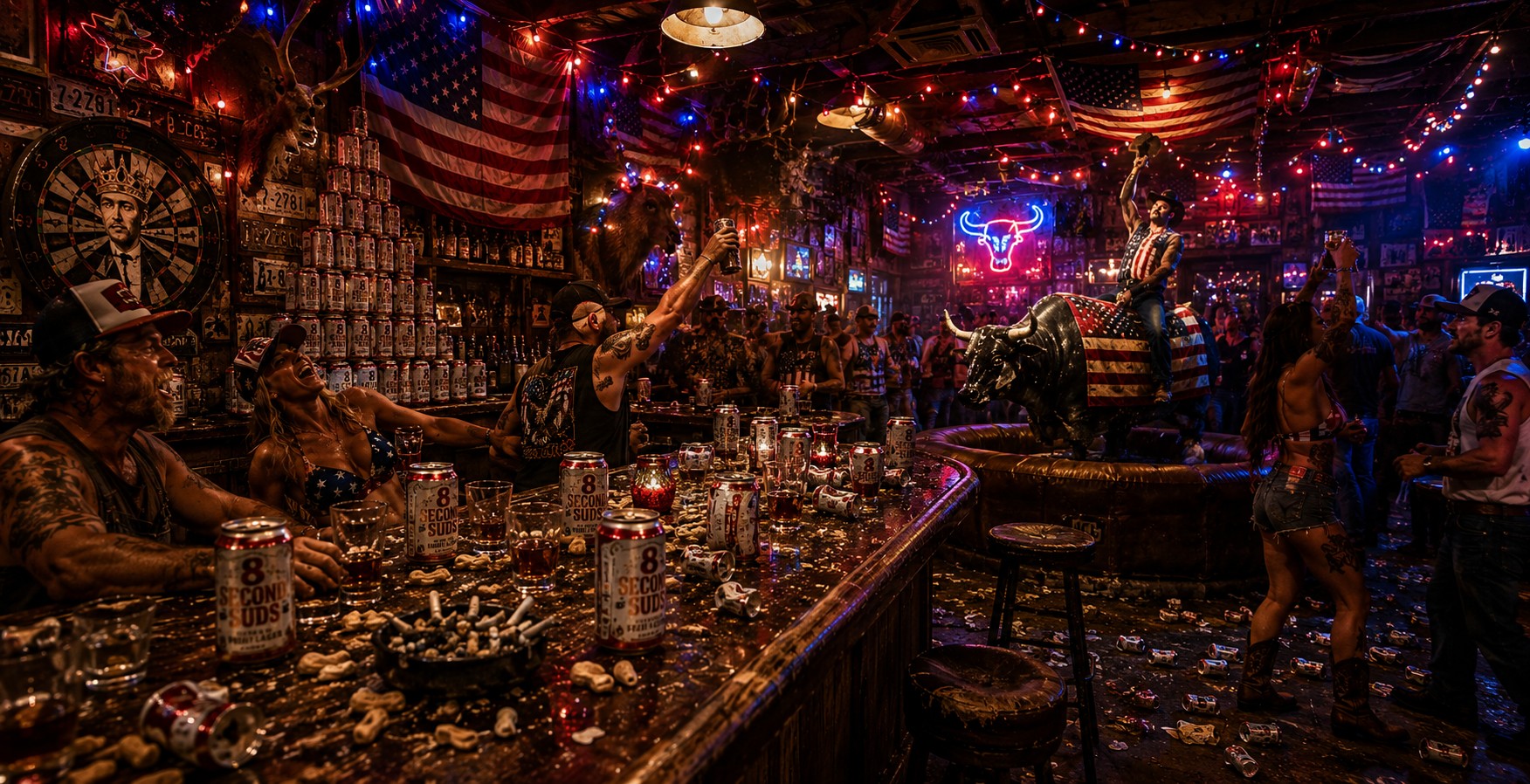
Limited edition 4th of July collection celebrating "Two Fiddy" years of American excellence.
SHOP THE COLLECTION
Loading merch...
No products available right now. Check back soon.